Lake Lanier spans 38,000 acres of Georgia waters, creating unique boating conditions that demand specific pontoon features. The lake’s busy weekends, fluctuating water levels, and occasional rough waters mean your pontoon needs solid construction to handle years of use. Choosing the right boat starts with understanding which materials and structural features will keep you safe and comfortable on this popular recreation destination.
Construction quality separates pontoons that last decades from those needing repairs within years. The deck material, welding quality, and structural bracing directly impact how your boat handles waves and maintains its value. Smart buyers focus on these core elements before considering amenities or aesthetics.
Key Takeaways
- Deck material choice affects maintenance, longevity, and resale value significantly
- All-aluminum construction eliminates wood rot problems common in traditional pontoons
- Quality welding and bracing systems determine how well your boat handles Lake Lanier’s chop
Who This Guide Is For
- Georgia boaters researching pontoon boats for sale, who want expert guidance
- Lake Lanier regulars who need a boat that handles busy weekends and varying conditions
- Families seeking low-maintenance pontoons that maintain value over time
- First-time pontoon buyers who want to make an informed purchase decision
- Boaters upgrading from wood-decked pontoons, who are tired of maintenance issues
Does Deck Material Matter for Lake Lanier Boating?
Deck material determines your pontoon’s lifespan and maintenance requirements. Traditional wood decking absorbs water, creates soft spots, and eventually rots despite protective coatings. Lake Lanier’s humidity and Georgia’s climate accelerate this deterioration. All-aluminum decks eliminate these problems entirely because aluminum doesn’t rot, warp, or require constant sealing.
Aluminum decks also add structural rigidity that improves handling in rough water. When boat traffic picks up on summer weekends, Lake Lanier generates significant chop and wakes. A rigid aluminum deck transfers less stress to mounting points, keeping furniture, railings, and hardware secure. This structural advantage becomes obvious after a few seasons when aluminum-decked boats maintain tight, rattle-free construction while wood-decked models develop squeaks and loose fittings.
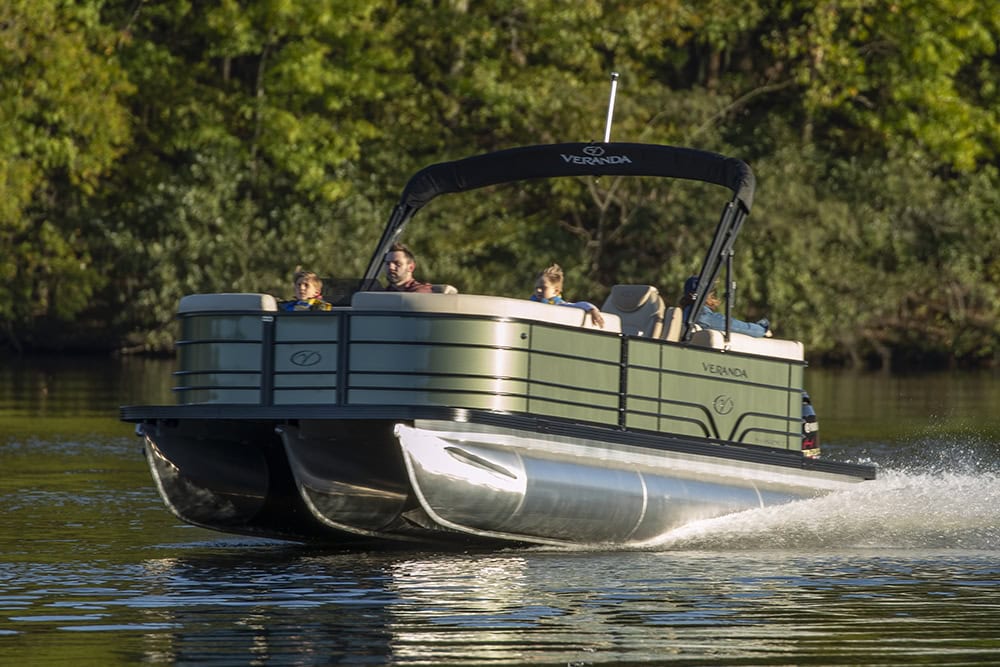
Veranda pontoons take aluminum deck construction a step further with a full-length “M” channel that is fully welded to the floor structure from front to back. Unlike other manufacturers that use small sections and bolt their floor to the M channel with crossmembers—requiring a separate underskin to protect wiring—Veranda’s aluminum extruded flooring features an integrated wave shield for a smooth underside and built-in wiring protection. This integrated wave shield is a standard feature on all Veranda models, where it actively reduces the amount of spray pushed forward. Veranda also includes standard lifting strakes on all models, which improve performance and ride quality.
One more spec worth knowing: Veranda uses .100-gauge aluminum as standard across all models. The industry standard is only .080 gauge, meaning Veranda boats are built with measurably thicker, more durable material right out of the box.
What Structural Features Handle Lake Lanier Conditions Best?
Quality welding makes the difference between pontoons that stay tight and those that develop leaks or structural failures. Look for continuous welds on pontoon tubes rather than spot welds. Continuous welds distribute stress across joints and prevent water intrusion. The crossmember bracing underneath the deck should connect solidly to all toons with reinforced attachment points.
For example, Veranda pontoons use heavy-duty crossmember systems that create a rigid platform resistant to flexing. This matters on Lake Lanier because larger lakes generate longer wave intervals than small ponds. When your boat drops into wave troughs, weak construction flexes and stresses joints. Strong bracing systems maintain structural integrity through thousands of these cycles, keeping your boat solid for decades.
On tritoon models, Veranda goes a step further with a full-length center log standard on all triple-toon configurations. Some manufacturers cut costs by using “pony” or “3/4” logs that don’t run the full length of the boat, which is a compromise that affects both structural integrity and performance. Veranda also features an integrated motor pod built directly into the center log structure, rather than bolting on a separate pod as an afterthought. This integration creates a cleaner, stronger connection point that holds up better under the stress of higher-horsepower applications.
Tritoons vs Pontoons on Lake Lanier
Tritoons add a third tube for improved stability and performance. This configuration reduces side-to-side roll when crossing wakes, making passengers more comfortable during busy lake traffic. The additional buoyancy also supports more weight, letting you carry more passengers and gear without sacrificing handling. For Lake Lanier’s often-crowded conditions, tritoons provide a more controlled ride.
The Boat Shop offers Veranda tritoons that combine the stability advantage with all-aluminum construction for the ultimate Lake Lanier platform. The third tube doesn’t just add stability; it improves fuel efficiency by reducing drag and allows higher horsepower ratings for water sports. If you plan to tube, wakeboard, or simply cruise confidently through rough water, tritoon construction delivers noticeable benefits over traditional two-tube designs.
What Makes Veranda Boats Superior for Georgia Waters?
Veranda builds every pontoon and tritoon with all-aluminum construction from deck to frame. This eliminates the wood rot issues that plague traditional pontoons in Georgia’s humid climate. The structural advantage goes beyond just avoiding rot. Aluminum’s strength-to-weight ratio allows Veranda to build lighter boats that handle better and consume less fuel without sacrificing durability.
The welding quality on Veranda pontoons and tritoons exceeds industry standards, creating watertight seals that last. Combined with heavy-gauge aluminum pontoon tubes and reinforced bracing, these boats handle Lake Lanier’s roughest days without flexing or stressing joints. When you’re navigating crowded waters or crossing boat wakes, that structural rigidity translates directly to passenger comfort and long-term reliability.
The attention to detail extends to the interior as well. All marine-grade vinyls used in Veranda boats have been tested using the Wyzenbeek double abrasion test, which is the same durability standard applied to upholstery in hospital waiting rooms, airports, theaters, and stadiums. This means the seating and surfaces on your Veranda aren’t just boat-grade; they’re built to withstand the kind of heavy, repeated use that commercial environments demand. For a family that spends every summer weekend on Lake Lanier, that level of material quality matters. Plus, there’s a variety of flooring, vinyl, rail, and panel color options on most models.
Practical Examples
Weekend Cruising: A family running a Veranda tritoon from one of Lake Lanier’s marinas to a favorite cove encounters multiple boat wakes. The rigid aluminum deck and three-tube design keep drinks stable and passengers comfortable, while wood-decked competitors flex and bounce. The all-aluminum construction requires zero maintenance between trips, just rinse and cover.
Water Sports: Pulling a tuber behind a Veranda pontoon demonstrates how structural integrity affects performance. The reinforced transom and solid crossmember bracing prevent flexing under power, delivering consistent towrope tension. Aluminum decking doesn’t absorb water from wet passengers, preventing the soft spots that develop on wood decks near swim platforms.
Long-Term Ownership: After five Georgia summers, a Veranda owner experiences no deck deterioration, loose railings, or structural squeaks. The all-aluminum construction maintains its original tight feel. Wood-decked pontoons of the same age often need deck repairs, railing reinforcement, or furniture remounting as wood degrades and fasteners loosen.
Common Mistakes to Avoid:
- Choosing a pontoon based solely on initial price without considering long-term maintenance costs
- Overlooking deck material quality because it’s hidden under carpeting or vinyl flooring
- Assuming all pontoons handle rough water equally when structural design varies significantly
- Ignoring welding quality and bracing systems that determine long-term durability
- Failing to test different construction types on actual lake conditions before purchasing
- Prioritizing amenities over structural integrity when foundation quality matters most
Frequently Asked Questions:
How long do wood decks typically last on pontoons in Georgia?
Wood decks usually show deterioration within 5-7 years in Georgia’s humid climate, developing soft spots near high-traffic areas first. Even with proper maintenance and sealing, wood eventually absorbs moisture and begins rotting. Aluminum decks eliminate this problem entirely and maintain structural integrity indefinitely.
Where can I find Veranda pontoons for sale in Georgia?
The Boat Shop specializes in Veranda boats and serves Georgia boaters looking for quality pontoons and tritoons. They understand Lake Lanier conditions and can match you with the right Veranda model for your needs. Visit their location to see the construction quality difference in person.
Do aluminum decks get hot in Georgia summers?
Quality pontoons install flooring over aluminum decks, preventing heat transfer. The aluminum itself conducts heat, but proper insulation and vinyl or carpet flooring keep surfaces comfortable. This setup actually performs better than wood, which can rot if water gets trapped under flooring materials.
Final Thoughts
Buying a pontoon boat for Lake Lanier requires focusing on construction fundamentals before considering accessories or aesthetics. All-aluminum construction eliminates the maintenance headaches and structural deterioration that plague wood-decked pontoons in Georgia’s climate. Quality welding, proper bracing, and solid materials determine whether your boat delivers decades of reliable service or requires constant repairs.
Veranda pontoons and tritoons offer the structural advantages Lake Lanier conditions demand. Their all-aluminum construction, superior welding, and reinforced bracing create boats that handle rough water confidently while requiring minimal maintenance. The Boat Shop provides Georgia boaters access to these quality pontoons backed by expert knowledge of local conditions. Invest in proper construction now, and you’ll enjoy worry-free boating on Lake Lanier for years to come.